A home lap pool can turn everyday exercise into something far easier to maintain. No travel, no crowded lanes and no need to plan your workout around public opening hours.
This guide explains how to approach home lap pool installation, from choosing dimensions and positioning the pool to planning construction, safety and long-term use.
What Is a Home Lap Pool?
A lap pool is a long, relatively narrow swimming pool designed primarily for continuous swimming and fitness. Unlike a general recreation pool, its layout prioritises a clear swimming line, consistent depth and minimal obstruction.
Homeowners often work with experienced pool specialists to balance the dimensions required for exercise with the space available around the home.
How Should You Plan a Home Lap Pool Installation?
The first step is to define how you intend to use the pool.
A competitive swimmer may want as much uninterrupted length as possible. A casual fitness swimmer may be comfortable with a shorter pool, especially if it includes a resistance system or swim jet.
You should also consider whether the pool will be used only for training or shared with other household members. A purely functional lap pool can be simple and streamlined, while a family-friendly design may include entry steps, a shallow ledge or bench seating outside the main swimming lane.
Before finalising the design, think about:
- Your preferred swimming style: Freestyle, breaststroke and interval training may require different amounts of clear width and turning space.
- How many people will swim: A single lane can suit one swimmer, while a wider pool may allow two people to train at the same time.
- How often the pool will be used: Frequent use can make heating, covers and efficient filtration more valuable.
- When you plan to swim: Early morning and evening sessions may require better lighting, wind protection and easier access from the house.
- Whether the pool has other purposes: Recreation, rehabilitation and entertaining may influence steps, depth and surrounding spaces.
A well-planned custom pool layout can incorporate these needs without allowing extra features to interrupt the swimming path.
What Dimensions Work Best for a Home Lap Pool?
There is no single ideal length for a residential lap pool. The correct size depends on the property, the swimmer and the available budget.
Traditional competition pools are much longer than most residential sites can accommodate. At home, many swimmers use a shorter pool effectively by increasing the number of turns or installing a counter-current system.
A width of around two to three metres may provide a comfortable single swimming lane. Greater width can be useful for two swimmers, family use or easier movement around steps and benches.
Depth also matters. A consistent depth may suit straightforward lap swimming, while a gently varied floor can support different users. The water should be deep enough for a safe and natural swimming stroke without being unnecessarily deep, which may increase construction and heating requirements.
| Design factor | Practical consideration | Potential benefit |
| Pool length | Use the longest clear dimension the site reasonably allows | Reduces the number of turns during training |
| Pool width | Allow enough room for a natural stroke | Improves comfort and reduces contact with walls |
| Pool depth | Choose a depth suited to swimming rather than diving | Supports efficient construction and easier heating |
| Entry position | Place steps outside the main swimming line | Keeps the training lane unobstructed |
| Resistance system | Consider one for compact sites | Allows continuous swimming in a shorter pool |
| Pool cover | Plan storage and access early | Reduces heat loss, evaporation and debris |
The detailed pool design process should test these dimensions against site access, boundaries, landscaping and the way the pool connects to the house.
Where Should a Home Lap Pool Be Positioned?
Position has a major influence on how often the pool is used.
A lap pool located close to the house can make regular training more convenient, especially during cooler weather. It may also provide better visibility, easier access to bathrooms and a stronger visual connection with indoor living spaces.
Long, narrow side yards can be particularly suitable for lap pools. These areas are sometimes underused, yet their proportions may naturally support a streamlined swimming lane.
Sunlight is another important factor. Good solar exposure may help warm the water and create a more inviting pool area. However, excessive sun can also increase evaporation and make the surrounding surfaces uncomfortable in summer.
Wind should not be ignored. A consistently exposed pool may lose heat more quickly and feel less pleasant before and after swimming. Fencing, planting and built structures can help reduce wind, provided they comply with safety requirements and do not block important sightlines.
Trees can offer shade and privacy, but they may also increase leaf litter and maintenance. Large roots may affect excavation or future pool structures, so existing vegetation should be considered during the site assessment.
For general information on pool safety and ownership obligations, homeowners can consult the NSW swimming pool rules alongside advice from their local council or certifier.
How Does Pool Construction Affect a Lap Pool?
Lap pools may look simple, but their long, narrow proportions require careful structural planning.
The site must be assessed for soil conditions, slope, groundwater and access. Excavation equipment, concrete trucks and other construction machinery need a practical route to the work area.
A restricted side passage or built-up urban block may require smaller machinery, crane access or alternative construction methods. These factors can influence both cost and programme.
The pool shell must be designed to remain stable over its full length. Long walls, ground movement and changing site levels may require additional engineering. Proper drainage around the structure is also important, particularly on sloping or moisture-prone land.
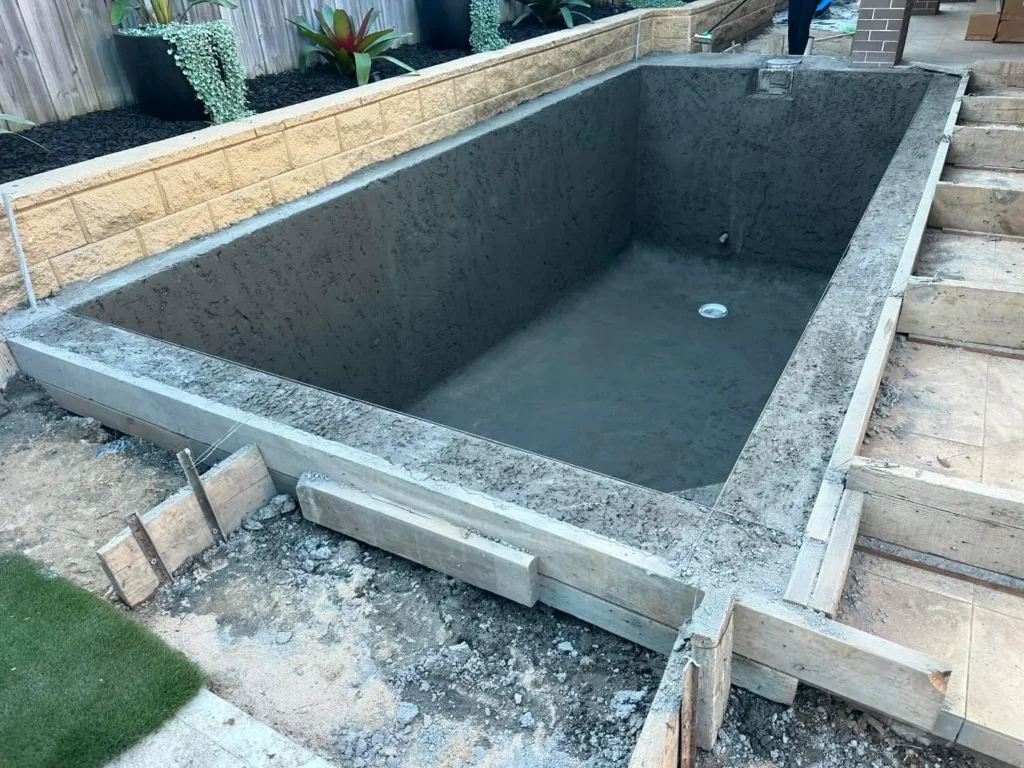
During the pool construction process, plumbing, steel reinforcement, concrete placement, waterproofing and finishes must be carefully coordinated. Small inaccuracies can become more noticeable in a long, straight pool because the lines are visually prominent.
Equipment location should also be planned early. Pumps, filters, heaters and dosing systems need sufficient ventilation and access for servicing. At the same time, they should be positioned to minimise noise near bedrooms, neighbours and outdoor seating areas.
What Features Make a Home Lap Pool Better for Fitness?
A lap pool does not need many features, but the right ones can make training more effective and enjoyable.
Clear lane markings on the pool floor can help swimmers maintain direction. A contrasting wall marker may also make turns easier to judge.
A pace clock or visible outdoor timer can support interval sessions. Some swimmers may prefer integrated smart controls that manage lighting, heating and filtration through an app.
Heating can significantly extend the useful swimming season. The best system depends on climate, pool size, intended water temperature and how often the pool is used. A cover can reduce heat loss and evaporation, making the heating system more efficient.
Lighting should provide even visibility along the pool rather than creating bright spots and dark sections. This is particularly important for early morning or evening training.
A swim jet or counter-current system can be useful when the site cannot accommodate a long pool. It allows the swimmer to remain in one position while swimming against a controlled flow of water.
Useful fitness-focused additions include:
- Lane guidance: A simple floor line helps swimmers stay centred during longer sessions.
- Accessible entry: Well-positioned steps or a handrail can support warm-ups, recovery and users with limited mobility.
- Poolside storage: Nearby space for towels, goggles and training aids keeps equipment organised.
- Outdoor shower: A practical shower area makes pre-swim and post-swim routines easier.
- Heating controls: Adjustable temperature settings can support different seasons and training preferences.
The final pool installation should ensure these features work together without narrowing the swimming lane or creating unnecessary maintenance.
How Can You Make a Lap Pool Easier to Maintain?
Regular maintenance is essential for water quality, equipment life and swimming comfort.
Long, narrow pools need good circulation from one end to the other. Poorly positioned inlets or outlets may create areas where debris collects or water movement is limited.
An efficient filtration system should be sized for the pool volume and expected use. Automated sanitation can reduce daily effort, although testing and routine checks are still required.
A pool cover is one of the most practical additions. It can reduce evaporation, retain heat and limit debris, although the cover and roller need a convenient storage position.
Surrounding landscaping should also be chosen carefully. Plants that shed large quantities of leaves, flowers or seeds may increase cleaning. Low-maintenance planting can soften the pool area without creating extra work.
The paving or decking around the pool should provide safe access for cleaning and equipment servicing. Narrow walkways can make routine tasks awkward, particularly along the full length of the pool.
What Safety Requirements Apply to Home Lap Pools?
A lap pool must meet the same safety obligations as other residential swimming pools.
Barrier requirements vary by state, territory and project type. Pool fencing, gates, non-climbable zones and access points should be reviewed with a qualified certifier or relevant authority before construction begins.
Safety should also influence the design itself.
Steps should be clearly visible and positioned away from the primary swimming path. Pool lighting should make the full length of the water easy to see. Slip-resistant surfaces are important around entries, turns and frequently wet areas.
Where children may use or approach the pool, visibility from the house and outdoor living areas becomes particularly important. Landscaping, screens and furniture should not obstruct supervision.
A long pool can create a false impression that every section is the same depth, so any depth changes should be clearly planned and communicated.
How Can a Lap Pool Fit Into the Wider Backyard?
A lap pool should support the broader outdoor environment rather than overwhelm it.
Its narrow shape can leave useful room for garden beds, dining areas or lawn. Running the pool parallel to the house or boundary often creates a clean, organised layout.
The visual style should also relate to the architecture of the home. Straight lines, simple coping and restrained materials may suit a contemporary property, while natural stone and softer planting can help the pool feel more relaxed.
Shade is valuable near the entry or recovery area, even when the swimming lane remains open to the sun. A small seating space can also make the pool useful for stretching, cooling down or supervising other swimmers.
The surrounding area does not need to resemble a professional sports complex. A few carefully chosen elements can support fitness while keeping the space comfortable and residential.
Is a Home Lap Pool Installation Right for You?
A lap pool can be an excellent choice for homeowners who want convenient, regular exercise without leaving home.
The strongest designs balance swimming performance with the practical realities of the property. Length, width, depth, position, heating, access and maintenance all need to be considered together.
Tropical Pools designs pool solutions around individual homes, site conditions and the way each household intends to use the water. To discuss a home lap pool installation that supports both fitness and everyday living, contact the Tropical Pools team and speak with a local consultant.